
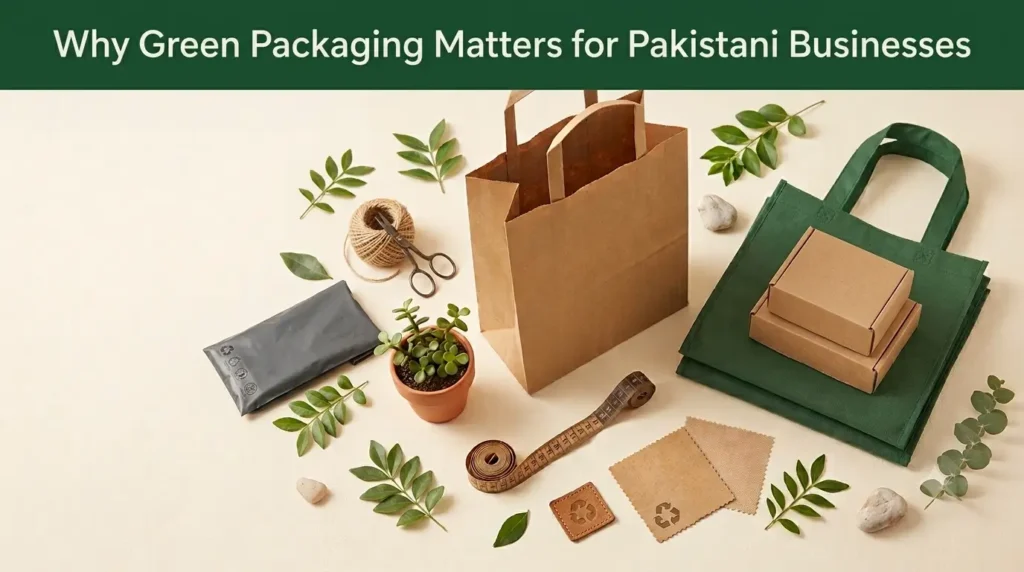
Let’s get one thing straight. Green packaging matters in Pakistan for reasons that have very little to do with saving the planet in some abstract sense, and everything to do with staying legally compliant, financially sensible, and relevant to customers who’ve gotten noticeably more particular in the last two or three years.
Start with the legal side. Punjab banned single-use plastic bags in major cities back in 2023, and enforcement has picked up unevenly but persistently random market checks, fines that range from a few thousand rupees to considerably more for repeat commercial violators. Islamabad has its own version. Sindh is moving slower but the direction is clear across the country. Businesses that haven’t shifted away from thin plastic packaging are gambling on inconsistent enforcement, and that’s a bad long-term bet for anyone planning to stay in business past this quarter.
Then there’s the customer behavior shift, which is subtler but arguably bigger. Younger, urban, middle-and-upper-income buyers exactly the demographic most small and mid-sized brands are chasing on Instagram and TikTok have started treating packaging as part of the product review. A skincare brand in Karachi told me their return-customer rate went up after they switched from plastic pouches to kraft paper mailers, not because the product changed, but because people felt better about buying from them again. That’s not a coincidence you can ignore.
And exporters have it even more directly in front of them. Buyers in the EU and increasingly in the Gulf are asking for sustainability documentation before signing contracts, sometimes as a formal requirement, sometimes just as a quiet preference that tips the decision toward whichever supplier can show they’ve thought about it.
The laziest version of green packaging is slapping a leaf logo on the same plastic bag and calling it eco-friendly. Customers aren’t as easily fooled as businesses assume greenwashing gets called out fast on social media in Pakistan, and once it’s called out, it does more damage than the original plain packaging ever would have. If the material hasn’t actually changed, don’t claim it has.
This is the mirror-image mistake. A business decides to go green, orders a batch of thin biodegradable bags without testing them properly, and then finds out two weeks in that the bags tear under real product weight clothes, groceries, anything with actual mass. Now they’re double-bagging everything, which defeats the purpose and burns through inventory twice as fast. Sustainable packaging still has to survive a rickshaw ride home.
A lot of business owners write off sustainable packaging before even getting a quote, assuming it’ll blow the budget. Sometimes it does cost more per unit. But not always, and rarely by as much as people assume especially once you compare it against replacement costs from bags that fail, or the reputational cost of a customer complaint that goes semi-viral.
Some suppliers market products as “eco-friendly” using vague, unverifiable claims no GSM specification, no clarity on whether it’s actually recyclable or just biodegradable-in-theory. Businesses buy in, then can’t answer a basic customer question about what the bag is actually made of. That’s an awkward position to be in when a customer asks directly, and it happens more than suppliers would like to admit.
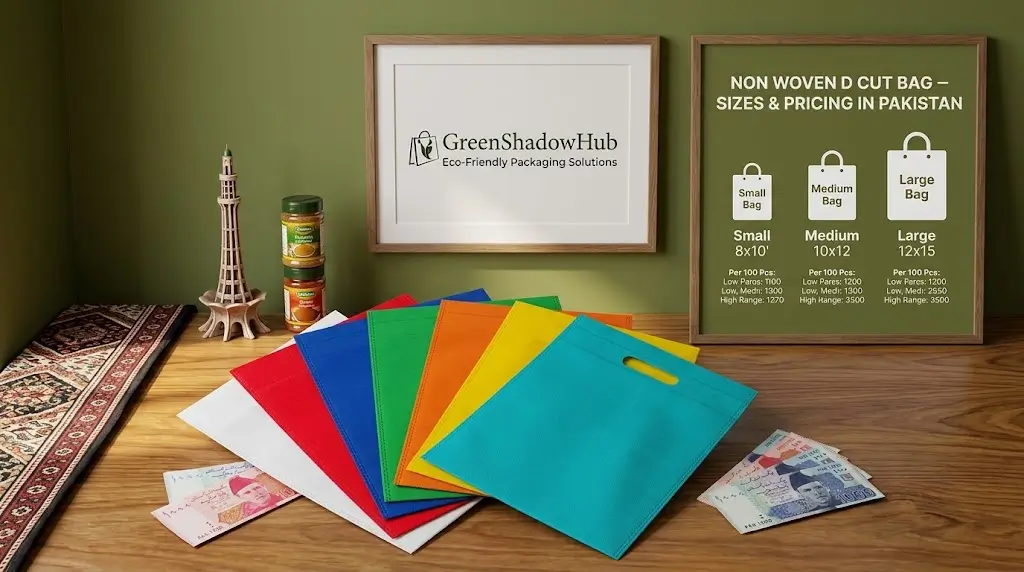
Numbers shift with raw material prices, but here’s roughly where things sit based on recent supplier quotes across Lahore, Karachi, and Faisalabad:
The premium on genuinely sustainable materials tends to sit somewhere between 15% and 40% over the cheapest plastic alternative, depending on category. That sounds like a lot until you run the actual math on a business doing a few hundred orders a week the difference often lands under Rs. 5 per unit, which most brands can absorb into pricing without customers noticing, especially if it’s mentioned on the packaging itself.
Lead time matters too. Custom printed sustainable packaging usually needs 10-15 days minimum for smaller orders, longer for anything requiring specific certifications or unusual sizing. Businesses that wait until a launch is two weeks away end up paying rush surcharges of 20-30% on top of everything else, which is avoidable with a bit of planning.
Before signing off on a supplier or a bulk order, run through this:
Every business spends real money on shop design, staff training, social media managers, and then hands the customer’s last physical interaction with the brand to whatever packaging was cheapest that quarter. That’s backwards. The bag or box is the thing people photograph, reuse, and remember it’s doing marketing work whether anyone planned for it or not.
My friend in DHA switched her packaging within a month of that Instagram callout. She still gets the occasional customer mentioning it, except now it’s the reason they recommend her page to a friend, not the reason they complain about it.
If you’re rethinking your own packaging and want materials that actually hold up sturdy, genuinely sustainable, and priced without the guesswork GreenShadowHub is a good place to start the conversation.

WhatsApp us