It’s 2 AM at Islamabad International, and there’s a family of six sitting cross-legged on the floor near Gate 4, repacking a suitcase that’s twelve kilograms over the limit. The father is pulling out extra plastic bags stuffed with slippers, prayer mats, a small first-aid pouch, three types of oil bottles — all of it loose, all of it about to spill the second the zipper gives out. I’ve seen this scene more times than I can count at departure lounges before Hajj season. It’s not disorganization. It’s just that nobody handed these families the right tool for the job.
That tool, as it turns out, is something most people wouldn’t look at twice: a non-woven travel kit. Not glamorous. Not something you’d post about. But once you’ve watched enough pilgrims struggle with loose items, torn plastic bags, and suitcases that won’t zip, you start to understand why the right kit matters more than people assume.
This isn’t a product pitch dressed up as an article. It’s a look at why non-woven travel kits have become the quiet standard for Hajj and Umrah preparation in Pakistan, what separates a decent one from a flimsy one, and what it actually costs to get this right.
Hajj and Umrah travel is unlike any other trip a person takes. You’re not just packing clothes — you’re packing for ihram changes, for wudu on the move, for long hours standing in Masjid al-Haram, for humidity in Jeddah and dry heat in Madinah, sometimes within the same 48 hours. Every item needs a place, and every place needs to survive being opened and closed dozens of times over ten to fifteen days.
This is where ordinary packing habits fall apart. Plastic bags tear. Cheap pouches lose their zips by day three. Loose items go missing in shared rooms with four or five other pilgrims. I spoke with a Lahore-based Hajj group organizer who told me flatly: “Log jo organized aatay hain, unka pura Hajj alag tarah guzarta hai — stress kam hota hai.” That single sentence captures the whole point. A good travel kit isn’t about looking neat. It’s about removing one more thing to worry about during a trip that already demands so much physically and spiritually.
Non-woven fabric fits this need almost perfectly, and it’s worth understanding why. It’s lightweight, which matters when every kilogram of luggage allowance is precious. It’s breathable, so items inside don’t trap moisture the way plastic does. It holds shape without needing rigid internal structure, which keeps the overall kit light. And critically, it’s the fabric most commonly used across Pakistan’s growing eco-conscious retail space — which means kits made from it are increasingly affordable to produce at scale, not just imported novelty items.
I’ve watched the same handful of packing mistakes repeat themselves every Hajj season, and each one is avoidable.
Buying a kit based on looks, not compartments. A lot of people pick whichever kit looks the nicest on a shop shelf without checking whether it actually separates ihram items from toiletries, from documents, from miswak and prayer beads. A kit with one giant open compartment isn’t a kit — it’s just a slightly nicer bag.
Ignoring zipper and stitching quality. This sounds minor until you’re on day nine of Umrah and your zipper has separated from the fabric. Cheap non-woven kits often use plastic zippers that wear out fast under repeated daily use. A pilgrim doesn’t have time to hunt down a tailor in Madinah.
Packing loose oils and liquids without a sealed pouch. Ihram-related oils, ittar, and small toiletry bottles leak — it’s almost guaranteed over a two-week trip. Kits without a dedicated water-resistant inner pouch end up ruining everything else packed alongside them.
Treating the kit as an afterthought bought a day before departure. Group organizers who order kits in bulk only days before travel often end up with whatever’s in stock, not what’s actually useful. The families who plan their kit purchase weeks ahead get better quality, better pricing, and often customization options that last-minute buyers simply don’t have access to.
Here’s where a lot of confusion happens, because “travel kit” gets used loosely to describe everything from a single drawstring pouch to a full multi-compartment organizer.
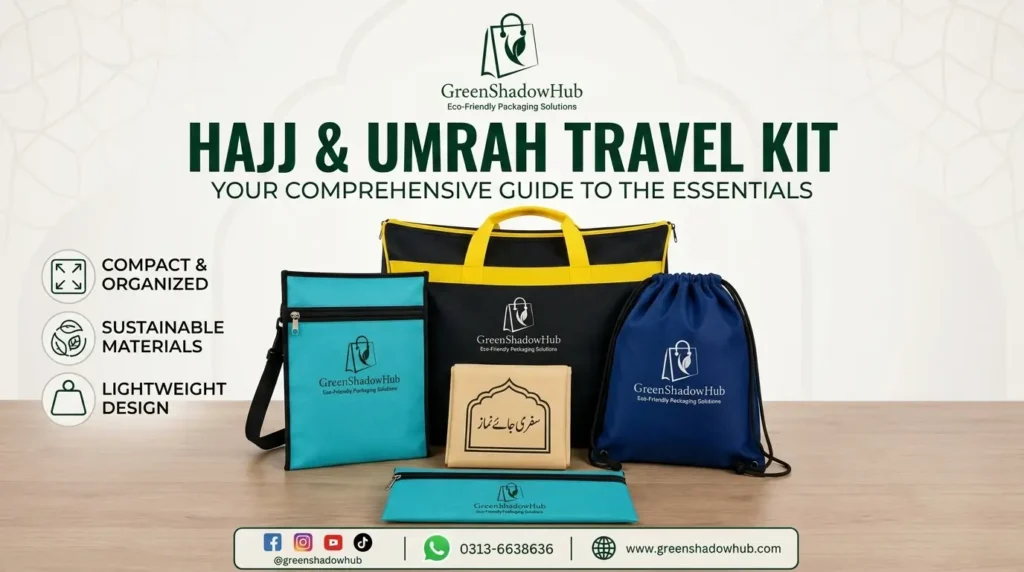
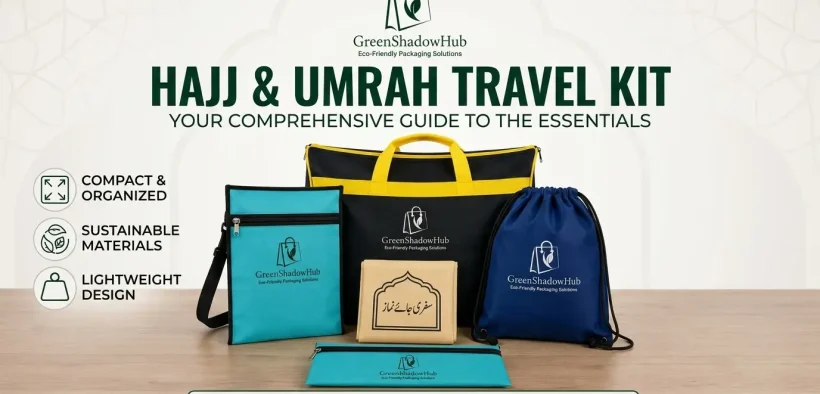
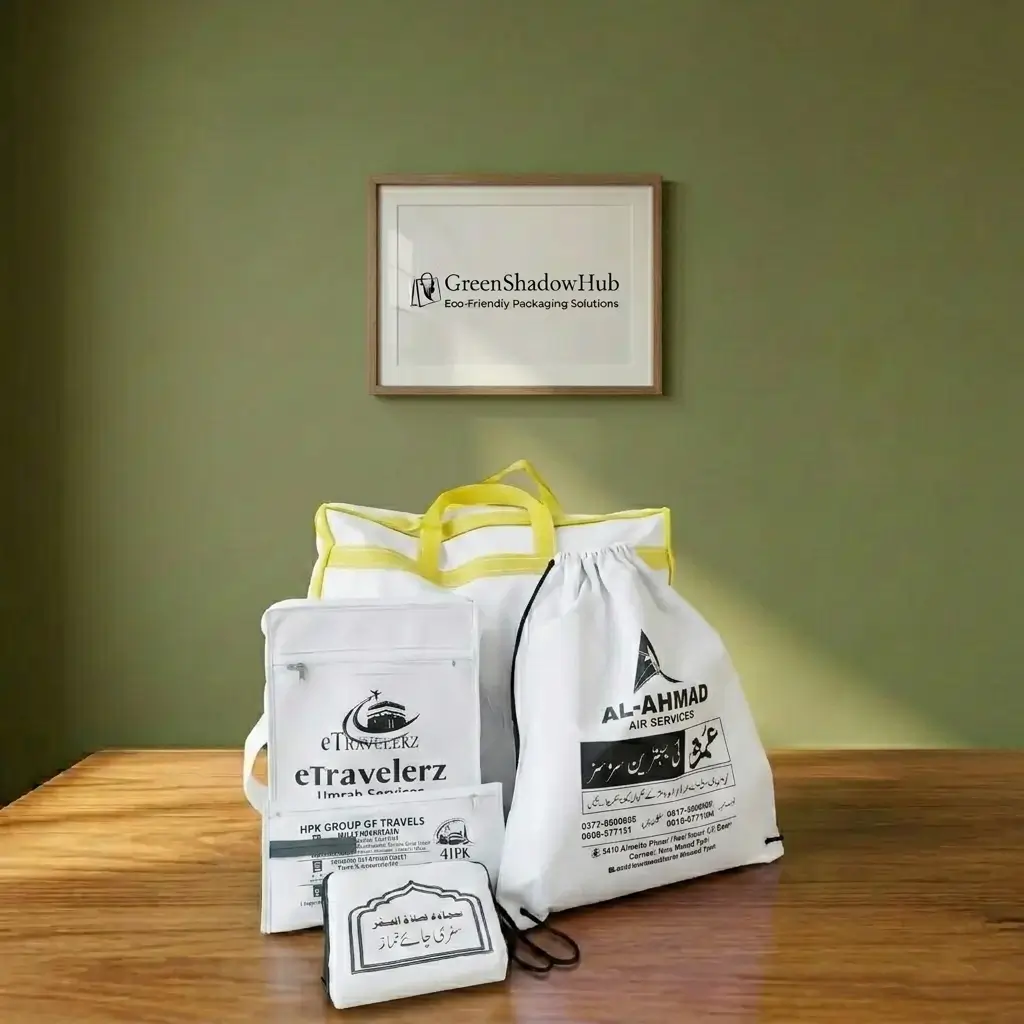
A properly built non-woven Hajj/Umrah travel kit typically includes:
On pricing, here’s what’s realistic in the current Pakistani market. Basic single-pouch non-woven organizers start around Rs. 300–500. A proper multi-compartment travel kit with reinforced stitching and separate toiletry pouches typically runs Rs. 800–1,500 depending on size and number of compartments. Premium versions with branded packaging, embroidered detailing, or bundled accessories (ihram set, tasbeeh, small mat) tend to land between Rs. 1,800–3,000.
For Hajj group organizers or travel agencies buying in bulk — say 50 to 200 kits for a group departure — per-unit pricing usually drops by 15–25%, which matters when you’re outfitting an entire group and want consistent quality across every pilgrim’s kit rather than a mismatched pile of whatever was available.
Before ordering a non-woven travel kit for yourself, your family, or a Hajj group, run through this:
Go back to that family at Gate 4, cross-legged on the airport floor at 2 AM. What they needed wasn’t more space in their suitcase. It was one properly built kit that kept everything where it belonged from the first day of the trip to the last. That’s really all a non-woven travel kit is meant to do — not impress anyone, just quietly hold things together when everything else about the journey is demanding, unfamiliar, and out of your control.
If you’re preparing for Hajj or Umrah this year, either for yourself or for a group you’re organizing, it’s worth looking at a kit built specifically for this journey rather than repurposing whatever pouch was lying around the house. Green Shadow Hub’s Hajj & Umrah Travel Kit is built around exactly this — proper compartments, durable non-woven fabric, and the kind of practical design that makes the trip a little lighter to carry.