
f you’re a shop owner, boutique, or small brand in Pakistan trying to figure out how to order bulk non woven bags without wasting money or waiting three extra weeks, this is the part nobody explains properly the actual process, the actual costs, and the actual mistakes that trip people up.
A bag isn’t packaging. It’s a walking billboard that leaves your shop and keeps working for you on someone’s kitchen counter, in their car boot, at their next grocery run. Every customer who reuses your bag is showing your name to people who’ve never heard of you for free.
That’s the upside. The downside is just as real. A cheap, thin non-woven bag that rips at the handle on the way to the rickshaw does the opposite job it tells the customer your product isn’t worth carrying properly. I’ve had a boutique owner in DHA tell me she switched suppliers after a customer complained her new lawn suit fell out of a torn bag onto a wet footpath. That complaint cost her more than any bag order ever would have.
There’s also a cost side most people ignore until it bites them. Non-woven bag pricing in Pakistan moves with PP granules (the raw material), and that price tracks international petrochemical rates plus the dollar rate. When the rupee weakens, your next reorder can jump 15-20% even if nothing else changed. Business owners who order reactively only when they’ve run out get hit by this every single time. Business owners who plan two to three months ahead can lock in rates and dodge the panic-buy.
And then there’s the practical, boring reality: printing takes time. Screen printing needs a plate made for each design, which alone can take 3-5 days before production even starts. If you’re ordering for a seasonal push Ramadan, Eid, back-to-school and you place the order a week before you need it, you’re setting yourself up to either pay a rush fee or get plain unprinted bags at the last minute.
Ordering by price alone. The lowest quote per bag is almost always the thinnest GSM available. Someone quoting Rs 8 per bag when everyone else is at Rs 12-14 isn’t being generous they’re using 60-70 GSM fabric that tears if you put more than a kilo in it. You save money on paper and lose it on complaints, returns, and reprints.
Not asking for a physical sample before bulk production. A photo on WhatsApp tells you nothing about handle strength, stitching quality, or how the color actually looks under real light. I’ve seen buyers approve a screenshot and then get a batch where the color looked nothing like what they expected printed navy came out closer to royal blue. A sample bag, held in your hand, costs you a day or two of waiting. Skipping that step costs you the whole order.
Vague sizing instructions. “Medium size” means something different to every printer in the city. If you don’t give exact dimensions in inches or centimeters length, width, gusset you’re leaving room for the supplier to interpret it however’s easiest for their machine setup that week. Always confirm the exact size against a bag you already like, or get a spec sheet in writing.
No written confirmation on quantity, price, and delivery date. This one sounds obvious, and yet it’s the most common gap. A verbal WhatsApp “haan ji theek hai” isn’t a contract. When there’s a dispute over the printed logo or a delayed delivery, the buyer with a written order confirmation even a simple screenshot of agreed terms has actual leverage. The buyer without one is just arguing.
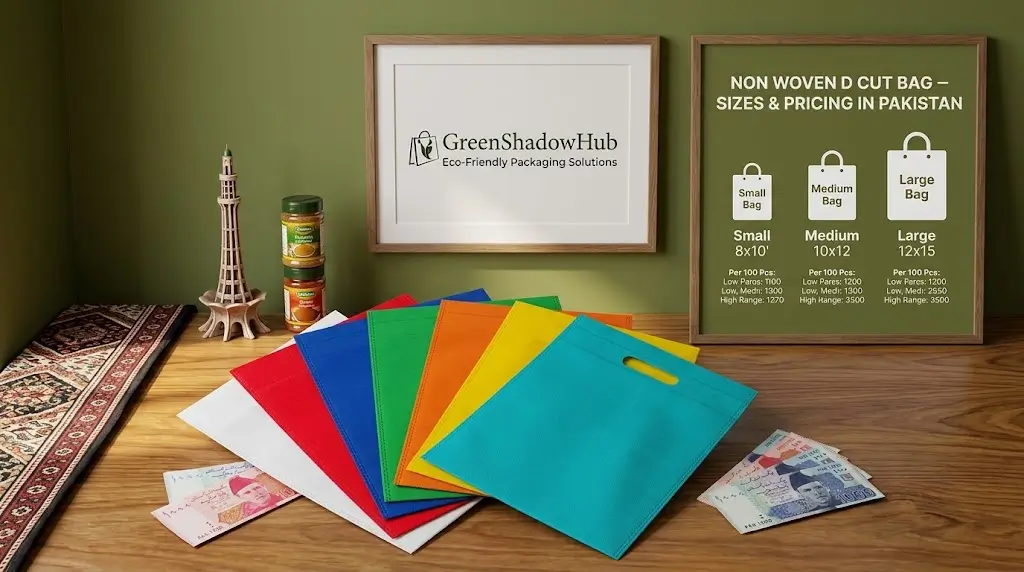
Pricing genuinely varies by size, GSM, and print complexity, but here’s the realistic range small business owners in Pakistan are working with right now:
Minimum order quantities typically start around 500-1,000 pieces per design from most manufacturers, though some smaller workshops will do 300 if you’re flexible on color. Below that, you’re often better off buying plain stock bags and getting them printed separately it’s usually cheaper than asking a factory to run a tiny custom batch.
On timing: a standard order with one printed design usually takes 7-12 working days from confirmed artwork to delivery, longer during Ramadan and Eid season when every printer in the country is backed up. Rush orders exist, but expect to pay 15-25% more for anything under a week.
One thing worth knowing GSM (grams per square meter) is the number that actually tells you about strength, not the price tag. Anything below 80 GSM is thin and better suited for light items like cosmetics or small accessories. For groceries, clothing, or anything with real weight, 90-100 GSM is the safer call, even if it costs a bit more per piece.
Print this out or screenshot it before your next call with a supplier:
If a supplier can’t answer three or more of these clearly, that’s information too.
That shopkeeper in Anarkali eventually got his bags reprinted, but he paid for it twice once in rupees, once in the two days he spent chasing the printer instead of preparing for Eid. The businesses that don’t end up in that position aren’t the ones who found some secret cheap supplier. They’re the ones who asked for a sample, wrote down the terms, and ordered before they were desperate.
Your bags carry your name out of your shop and into someone else’s world. Treat the order with the same care you’d give the product inside it.
If you’d rather skip the trial and error, GreenShadowHub works with small businesses across Pakistan on exactly this kind of sourcing and branding worth a look before your next bulk order.

WhatsApp us