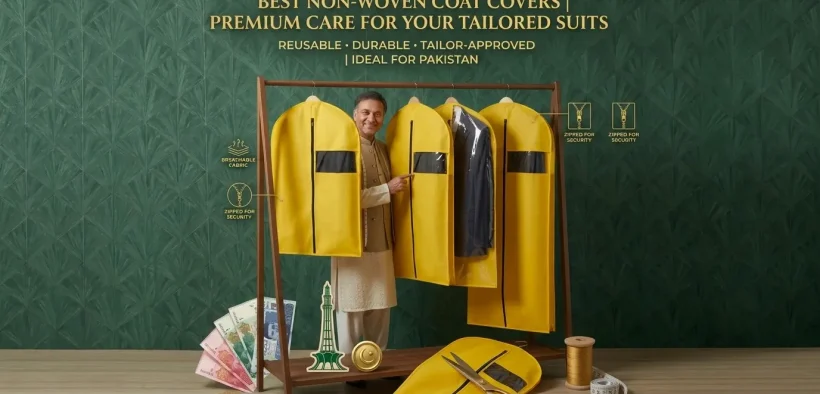
Walk into any decent tailoring shop near Liberty Market around wedding season, and you’ll see the same scene repeating itself finished coats and sherwanis hanging on a rail, each one wrapped in a plain fabric cover instead of the crinkly plastic sheets that used to be standard a few years back. I asked one tailor why he switched, and he didn’t give me some environmental speech. He just said the plastic used to trap moisture against the fabric in humid weather and leave faint marks on collars. That’s the entire case for a non woven coat cover in one sentence it’s not about looking modern, it’s about not ruining the coat you just spent three days stitching.
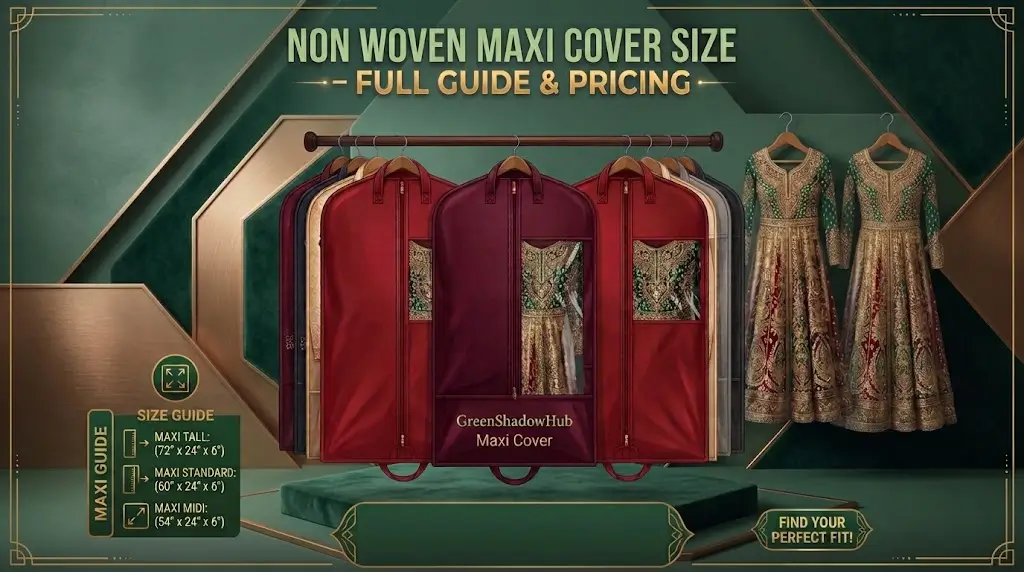
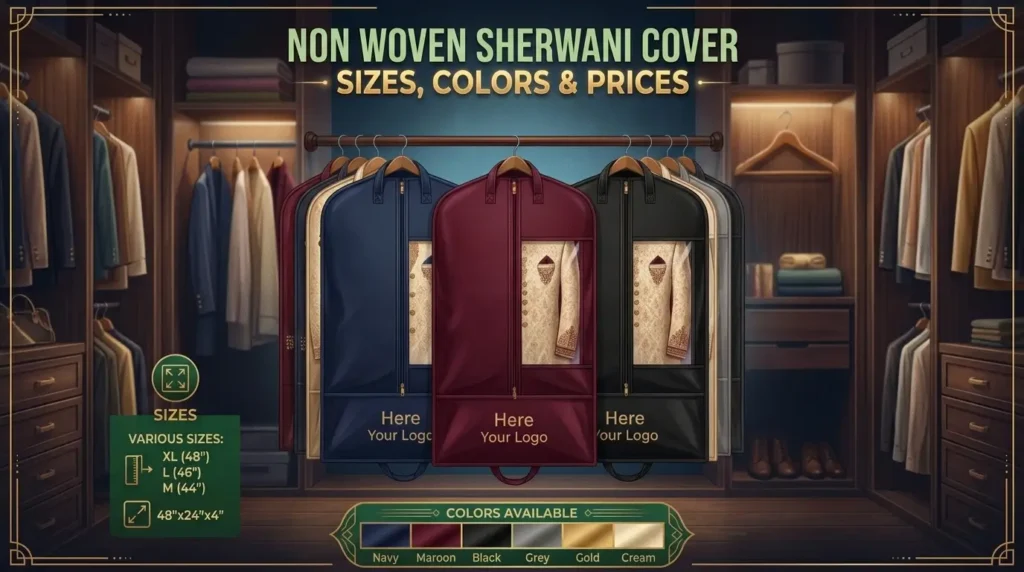
I looked into what Green Shadow Hub, a manufacturer based in Hasilpur, actually offers here, and it’s a more detailed product line than most people assume. There isn’t just one generic coat cover there are five distinct size variants under the 24×38 range, multiple color options, and a choice of fabric thickness depending on how much protection a garment actually needs. That level of detail matters for anyone buying in bulk, because a tailor covering lightweight blazers has very different needs than a formalwear shop covering heavy winter coats.
Fabric garments are strange in that they’re most vulnerable right after they’re finished freshly pressed, no wear yet, and completely exposed to dust, handling, and whatever’s floating around a shop or storage room. A coat cover’s entire job is to close that gap between “finished” and “delivered to the customer looking exactly the same.”
Non-woven fabric does this better than plastic sheeting for a reason that’s easy to overlook: breathability. Plastic seals moisture in, which in Pakistan’s humidity means garments can develop a musty smell or faint dampness marks if they sit covered for even a few days. Non-woven fabric lets air move through while still keeping dust off the surface, which is exactly the balance a stored or transported coat needs.
There’s a business angle here too that a lot of smaller shops miss. A coat cover is one of the few packaging items a customer actually keeps and reuses for storing the same coat at home, moving it between wardrobes, or protecting it during travel. That gives a printed cover with your shop’s name a much longer shelf life as advertising than a receipt or a shopping bag ever gets.

This is where a lot of buyers get confused, because “coat cover” sounds like a single product, but the actual range is more specific than that.
Green Shadow Hub’s coat covers all sit in the 24×38 base size, with five length variants depending on the garment type:
Beyond size, there’s a genuine choice on fabric specification, which matters more than most buyers realize. GSM (the fabric weight) comes in 60 or 75, with 75 GSM holding up noticeably better under repeated handling and heavier garments. The PP sheet thickness option 06mm or 08mm affects how rigid and durable the cover feels, which matters if covers are being reused across multiple seasons rather than used once and discarded.
Color-wise, the range covers Black, Blue, C.Green, Gray, Maroon, Orange, Red, White, and Yellow enough variety that a formalwear shop can either match their brand identity or simply stick with a neutral like black or white for a more universal look.
I’ve seen the same handful of ordering mistakes come up across tailoring shops and garment retailers.
Picking a length without measuring actual garment range. A shop stocking both blazers and full-length sherwanis often orders a single size across the board, which either leaves longer coats poking out the bottom or wastes material on shorter jackets. It’s worth matching the size variant to your actual product mix rather than guessing.
The price difference between 60 and 75 GSM is small, but the durability difference shows up fast once covers are being reused and handled daily in a busy shop. For a formalwear business reusing covers across many customers, the heavier gauge earns its cost back quickly.
These coat covers are sold with a minimum order quantity of 100 pieces per variant, which is worth planning around before assuming you can order a handful to test. It’s smarter to confirm quantity, size, and color needs together before placing a single order.
Given that a coat cover often ends up back in a customer’s home wardrobe, leaving it unbranded is a missed opportunity most retailers only realize after a competitor starts doing it.
Real pricing on Green Shadow Hub’s non woven coat covers currently runs like this across the size range:
The price range within each size reflects the GSM and PP sheet combination chosen heavier fabric and thicker sheet naturally sitting at the higher end. With a 100-piece minimum order, a tailoring shop stocking a single size and mid-range spec is looking at a starting order somewhere around ₨12,500–₨14,700, which is a manageable number for a shop that goes through dozens of coats a month during wedding and formalwear season.
Custom printing with a logo or shop name is available on top of the base price, along with bulk order options for businesses ordering across multiple sizes or larger quantities worth asking about directly if you’re outfitting a full formalwear line rather than a single size.
Before placing a bulk order for non woven coat covers, run through this:
That tailor near Liberty Market wasn’t chasing a trend when he switched his coat covers. He just got tired of customers noticing a musty smell on a coat that had been sitting wrapped in plastic for two weeks. A good non woven coat cover fixes exactly that kind of quiet, easily-missed problem and does it at a price that barely registers against what a damaged garment actually costs a business in reputation.
If you’re running a tailoring shop, boutique, or garment business and still relying on plastic sheeting to protect finished coats, it’s worth looking at a proper non woven option built for the job. Green Shadow Hub manufactures its Non Woven Coat Covers directly out of Hasilpur, Pakistan, across all five sizes, multiple colors, and fabric specifications suited to whatever your garment range actually needs.