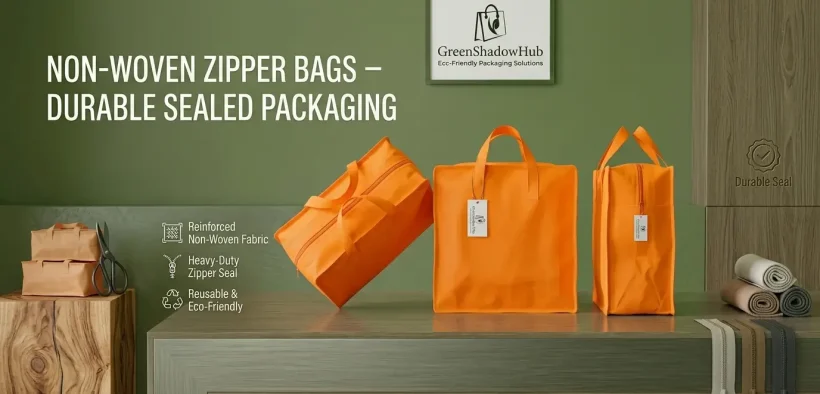
There’s a small textile trading office in Karachi’s Jodia Bazaar where the owner keeps a stack of samples on his desk dozens of packaging options he’s tested over the years, most of them abandoned after a few months because they either fell apart, cost too much, or just didn’t do what he needed. When I asked him which one actually stuck, he pulled out a plain grey pouch with a zipper running across the top and said, “yeh wahi hai jo Hasilpur se aata hai, aur customers bhi isko pasand karte hain.” That pouch is a non-woven zipper bag, and it’s become one of those unglamorous packaging staples that businesses across Pakistan quietly depend on far more than people realize.
What makes this particular product interesting isn’t just the material it’s where it’s coming from. Hasilpur, a smaller industrial town in Punjab that most people outside the textile and packaging trade have never heard of, has become a genuine manufacturing hub for non-woven fabric goods. That matters for buyers because local manufacturing means shorter lead times, more room to negotiate on bulk orders, and none of the customs delays or currency headaches that come with imported packaging.
Most packaging conversations focus on totes and box bags, but zipper closures solve a completely different problem repeated access without damage. A drawstring or open-top pouch works fine for a one-time gift, but the moment something needs to be opened and closed multiple times, drawstrings fray, plain flaps stop sitting flat, and customers start losing small items that fall out through gaps.
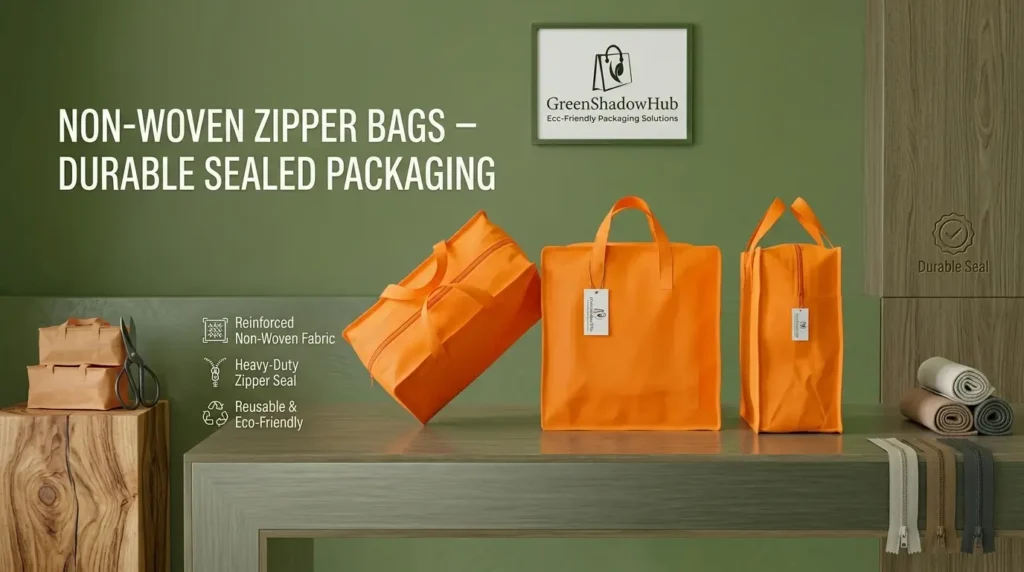
A non-woven zipper bag fixes this with a simple mechanical closure that actually seals the top edge. This matters enormously for a specific set of business needs: garment retailers packing folded clothing that customers might return to try on, boutiques bundling accessories that need to stay together, pharmacies and cosmetic shops packaging multiple small items as one unit, and increasingly, home organizers and small businesses using them for retail packaging of bedding, linens, and seasonal items.
The size matters here too. A 15×18×5 non-woven zipper bag sits in a useful middle ground big enough to hold a folded shawl, a stack of clothing, or a moderate hamper of items, but not so oversized that it becomes awkward for a customer to carry or a shop to store in bulk. I’ve seen boutique owners specifically request this size because it fits their most common product category without needing three or four different bag sizes cluttering their storeroom.
There’s also a durability argument that’s easy to underestimate. Zipper mechanisms on cheap bags are usually the first thing to fail the slider jams, or the zipper teeth separate from the fabric edge after a dozen uses. A well-made zipper bag with reinforced stitching along the zip line survives repeated opening and closing without becoming useless within weeks, which is exactly the kind of detail that separates a bag a business reorders from one they abandon after a single batch.
I’ve seen the same mistakes come up repeatedly with businesses ordering this type of packaging.
Ordering without checking zipper reinforcement. A zipper is only as strong as the stitching holding it to the fabric. Bags where the zipper is simply glued or lightly stitched onto thin non-woven fabric tend to separate within the first month of regular use, especially once any real weight goes into the bag.
Assuming one size fits every product line. A shop selling both small accessories and larger folded garments often tries to force everything into a single bag size, which either wastes material on small items or awkwardly overstuffs larger ones. It’s worth stocking two sizes rather than compromising on one.
Overlooking fabric GSM (gauge) when comparing suppliers. Two zipper bags can look identical in photos but differ enormously in actual fabric weight. Lighter GSM material is cheaper but sags, wrinkles, and tears faster not ideal for a bag meant to be reused or handled by customers directly.
Not asking about the manufacturing location and lead times. Businesses sometimes source from importers or middlemen without realizing they could order closer to the source. Buying directly from a manufacturer based in Hasilpur, for instance, often means better bulk pricing and faster turnaround than going through several layers of resellers.
Pricing on non-woven zipper bags in Pakistan varies mainly by size, fabric weight, and print requirements.
For context, a boutique packaging fifteen to twenty items a day in zipper bags is looking at a monthly packaging cost in the range of Rs. 15,000–25,000 depending on size and branding a cost that drops meaningfully once volume increases and direct manufacturer pricing kicks in rather than reseller markups.
Before placing a bulk order for non-woven zipper bags, go through this:
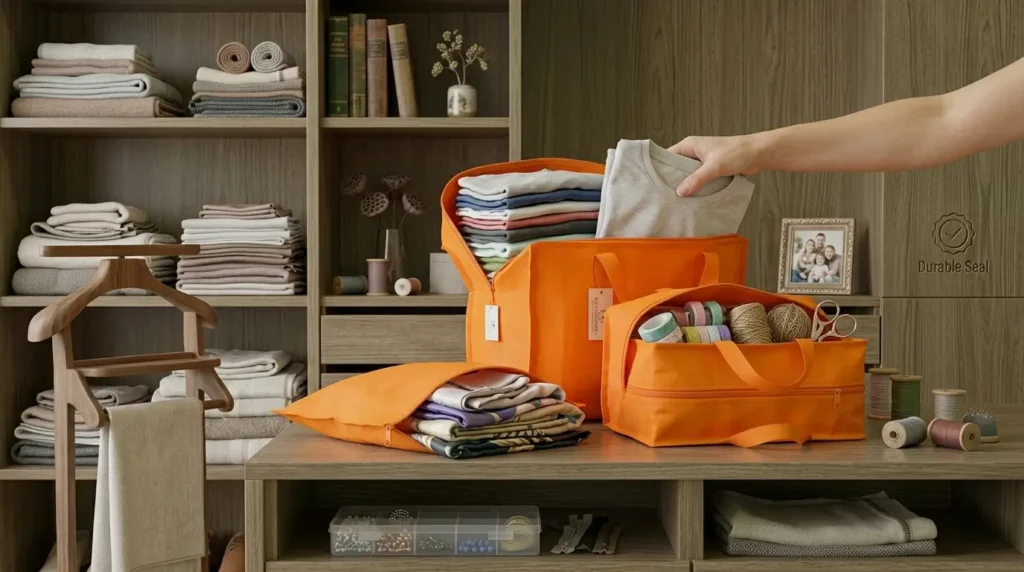
That trader in Jodia Bazaar wasn’t impressed by fancy packaging or clever branding when he settled on his zipper bag supplier. He cared about whether the zip still worked after two months of daily handling, and whether his supplier could actually deliver on time when he needed a reorder in a hurry. That’s the real test for any packaging product, and it’s exactly why non-woven zipper bags manufactured properly with reinforced stitching and consistent fabric quality earn repeat business instead of one-off purchases.
If you’re looking for durable, properly reinforced non-woven zipper bags in the 15×18×5 size, manufactured in Hasilpur and built to actually survive repeated use, Green Shadow Hub’s Non-Woven Zipper Bags are worth a look straightforward packaging that holds up as well as the products inside it.