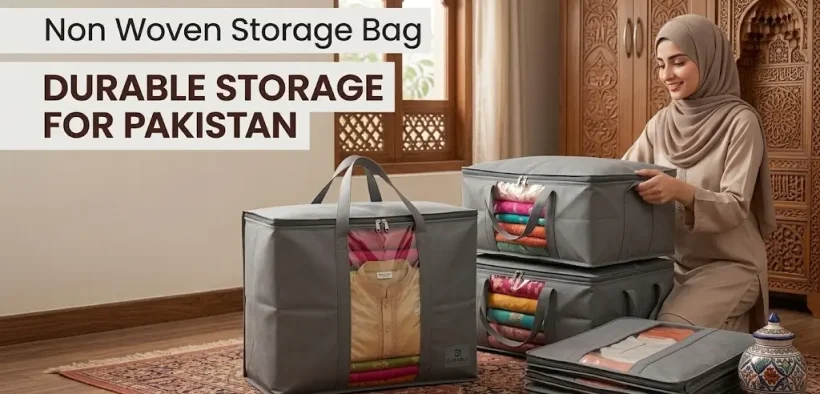
A friend of mine runs a small boutique in Model Town, Lahore, and last winter she showed me her storeroom shelves stacked with cardboard boxes gone soft from humidity, some collapsing under the weight of the ones above them, winter shawls spilling out of a box that had clearly given up months ago. She wasn’t disorganized. She just never had the right container for off-season stock, seasonal inventory, or the pile of extra packaging material every retail shop accumulates. That’s the exact gap a non woven storage bag fills, and once you see it solve this problem in one shop, you start noticing the same mess everywhere else homes, warehouses, boutiques, even small manufacturing units.
This isn’t a niche product anymore. It’s become one of those quiet, unglamorous items that businesses and households in Pakistan are increasingly relying on, mostly because cardboard, plastic bins, and loose stacking just don’t hold up over time, especially with our humidity and dust.
Here’s the thing nobody tells you about storage until it costs you something: it’s not about tidiness, it’s about protecting what you’ve already paid for. A boutique owner storing off-season clothing in open boxes is risking dust damage, moisture, and pest issues that quietly ruin inventory nobody’s checking on for months. A small manufacturing unit storing fabric rolls or finished stock in loose stacks is risking the same thing at a larger scale.
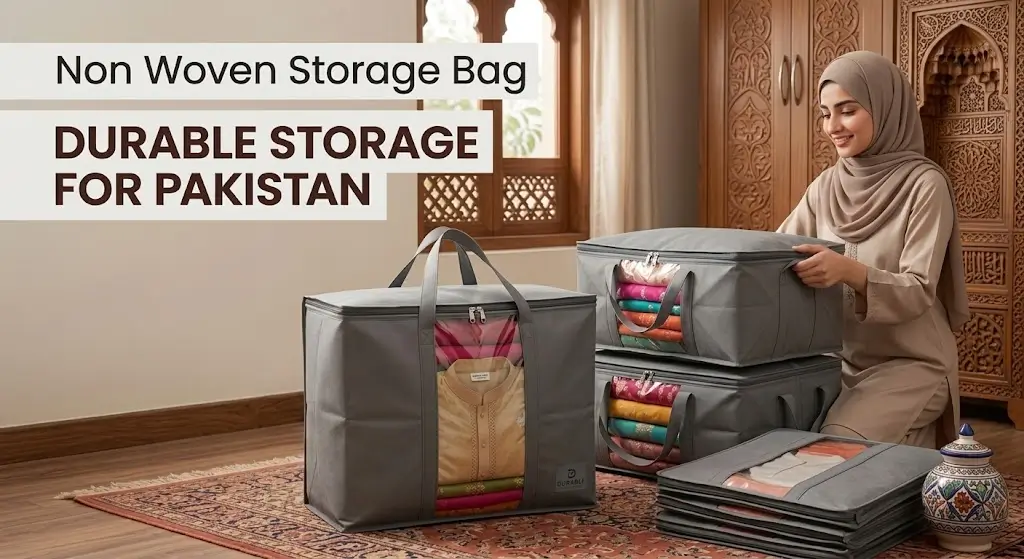
Non woven storage bags solve this because the material itself does something cardboard and thin plastic can’t it breathes. Fabric-based storage bags let air circulate around stored items, which matters enormously in Pakistan’s climate where trapped moisture inside a sealed plastic bin turns into mold within weeks during monsoon season. At the same time, the fabric is tightly woven enough to keep dust out, which cardboard boxes simply don’t manage once the flaps stop closing properly.
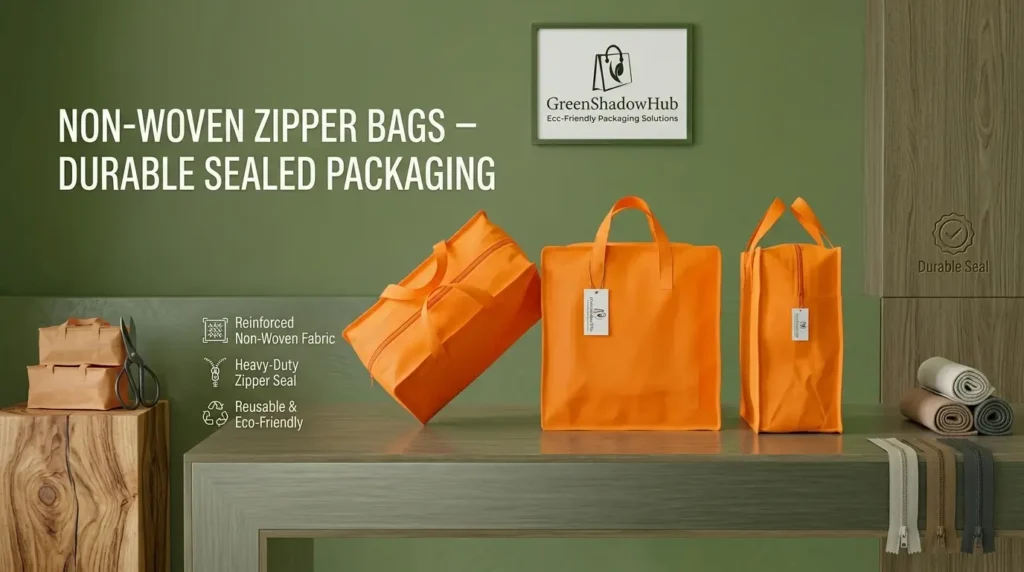
There’s a practical space argument too. Cardboard boxes take up permanent shelf space whether they’re full or empty, and they don’t stack well once they’ve been opened and closed a few times. Non woven storage bags with zippers fold flat when empty and hold their shape properly when full something that matters a lot when storeroom space is limited, which, if you’ve seen the back rooms of most small shops in Pakistan, it usually is.
For households, the same logic applies to seasonal clothing, quilts, extra bedding, and off-season shoes. I’ve spoken with people who switched from stacking blankets in plastic sacks to using proper storage bags with zip closures, and the difference they mention almost every time is the same no more musty smell when they open the bag six months later.
I’ve noticed the same handful of mistakes come up again and again, whether it’s a shop owner or someone organizing their own home.
Buying based on size alone, ignoring fabric weight. A lot of people pick the biggest bag available assuming bigger is always better, without checking whether the fabric is thick enough to hold weight without sagging or tearing at the seams. A large bag made from thin material collapses under its own stored contents within a few uses.
Skipping the zipper quality check. This one causes more returns and complaints than anything else. A storage bag is opened and closed repeatedly over months, sometimes years. Cheap plastic zippers jam or separate from the fabric edge after moderate use, and once that happens, the bag is basically useless for its actual job.
Storing items without any barrier against direct floor contact. Even a well-made storage bag placed directly on a damp floor will eventually absorb moisture from below. Businesses that skip basic shelving or pallets under stacked storage bags often blame the bag when the real issue is placement.
Treating storage bags as a one-time purchase without accounting for actual volume. Shops or households buy two or three bags, realize months later they needed fifteen, and end up back to loose stacking for the overflow. It’s worth estimating actual storage volume honestly before ordering, rather than buying reactively.
Non woven storage bags in Pakistan come in a fairly wide range depending on size, thickness, and closure type, so here’s a realistic breakdown.
Bulk pricing for businesses ordering 50 or more pieces usually brings per-unit cost down by roughly 15–20%, which matters for boutiques, warehouses, or manufacturing units that need consistent storage across dozens of units rather than a random mix of containers.
Compare this to the actual cost of damaged inventory. A boutique losing even a handful of shawls or dresses to moisture damage over a single storage season is looking at losses that easily outpace what proper storage bags would have cost upfront. It’s the same math as most packaging decisions the cheap option isn’t cheap once you count what it fails to protect.
Before ordering non woven storage bags, whether for home or business use, go through this list:
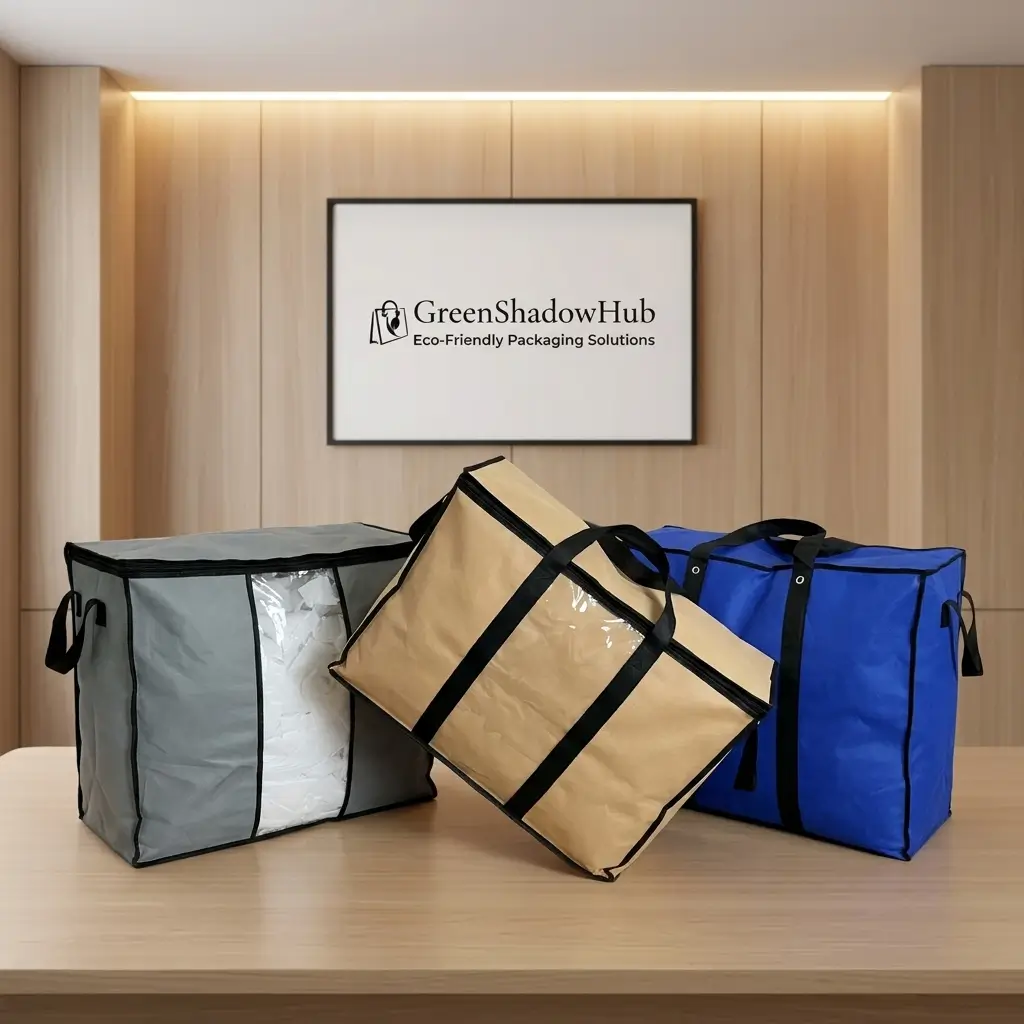
That boutique owner in Model Town eventually replaced every collapsing cardboard box with proper non woven storage bags, sorted by season and stacked on simple shelving. It wasn’t a dramatic renovation it just meant she stopped losing stock to humidity and stopped dreading trips to the storeroom. That’s really the entire value of a good storage bag. It’s not exciting, but it quietly protects things you’d otherwise lose without ever noticing until it’s too late.
If your storeroom, warehouse, or closet looks anything like that boutique did before the switch, it’s worth looking at proper non woven storage solutions built to actually hold up. Green Shadow Hub’s Non Woven Storage Bag is designed for exactly this durable, breathable storage that protects what you’ve already invested in.