
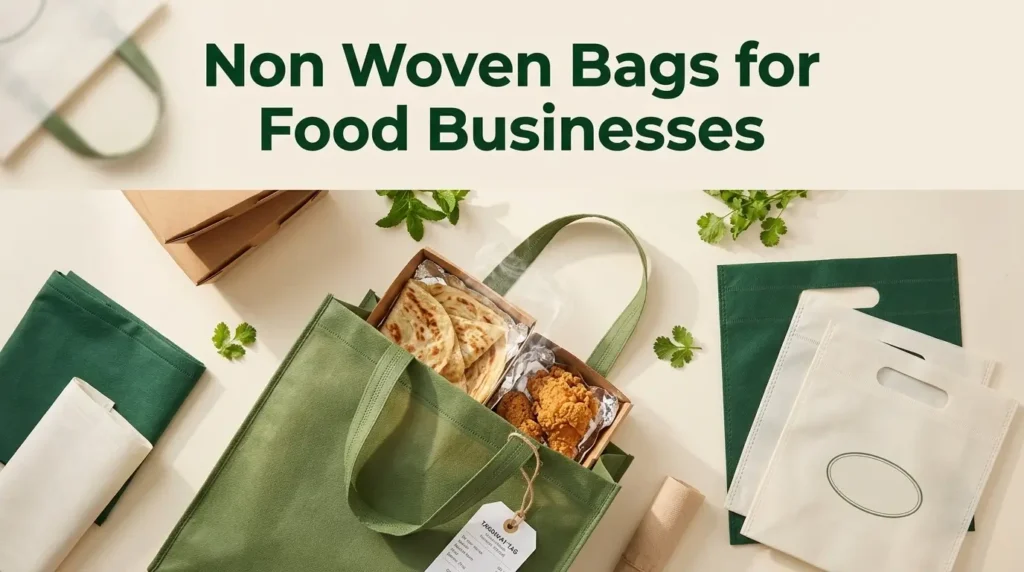
A lot of restaurant and food-stall owners in Pakistan still think of non woven bags for food businesses as a premium add-on something bigger chains do because they can afford to. That’s backwards. Non-woven bags aren’t the expensive option anymore. Thin plastic bags are the expensive option, once you count the returns, the complaints, the government crackdowns, and the fact that a torn bag makes your samosas look like they fell off a truck.
Punjab, Sindh, and Islamabad have all pushed plastic bag bans at various points over the past few years enforcement is inconsistent, sure, but the direction is obvious. Businesses that got ahead of it aren’t scrambling now. The ones still using thin polythene are the ones paying fines or improvising with whatever’s on hand when a customer walks in.
Food packaging isn’t like packaging a phone case. Grease, steam, moisture, and heat all attack a bag the moment food goes inside it. A thin plastic bag holding hot biryani sweats condensation inside itself that moisture then soaks back into the rice, and by the time the customer gets home, the top layer is soggy and the bag has a faint smell that wasn’t there an hour ago.
Non-woven fabric made from spun-bonded polypropylene breathes differently. It handles heat better, doesn’t go limp with oil the way thin plastic does, and it holds shape, which matters more than people think. A bag that holds its shape means the food inside doesn’t shift, tilt, or spill during a bike delivery down a pothole-heavy road in Gulberg.
There’s also the brand side of it, which food business owners underrate constantly. A printed non-woven bag with your restaurant’s name and logo travels. It sits on someone’s kitchen counter for ten minutes before they unpack it. It gets reused for grocery runs, sometimes for months, quietly advertising your business to everyone who sees it on a bus or in a market. A thin plastic bag gets balled up and thrown away in ninety seconds. One of these is free marketing. The other is just waste.
And for dine-in places doing takeaway or bakeries doing home delivery, there’s a hygiene perception issue too customers in urban Pakistan have gotten more aware of what they’re eating out of, especially post-COVID. A sturdy, clean-looking bag signals a business that takes food handling seriously, even if nothing about the actual cooking changed.
Non-woven fabric is measured in GSM (grams per square meter), and this is where a lot of sellers get burned. Bags under 60 GSM look fine on day one but tear at the seams within a few uses, especially if they’re carrying anything with weight a family-size biryani order, a stack of naan, a couple of kilos of mithai. Going with the lowest quote from a supplier often means going with the thinnest, weakest fabric available.
Standard non-woven bags aren’t automatically grease-proof. If you’re packing pakoras, parathas, or anything fried, you need either a laminated non-woven bag or an inner lining plain uncoated fabric will show oil stains through within minutes and can weaken over time with repeated grease exposure. Businesses that skip this step end up with bags that look dirty even when the food inside is fresh.
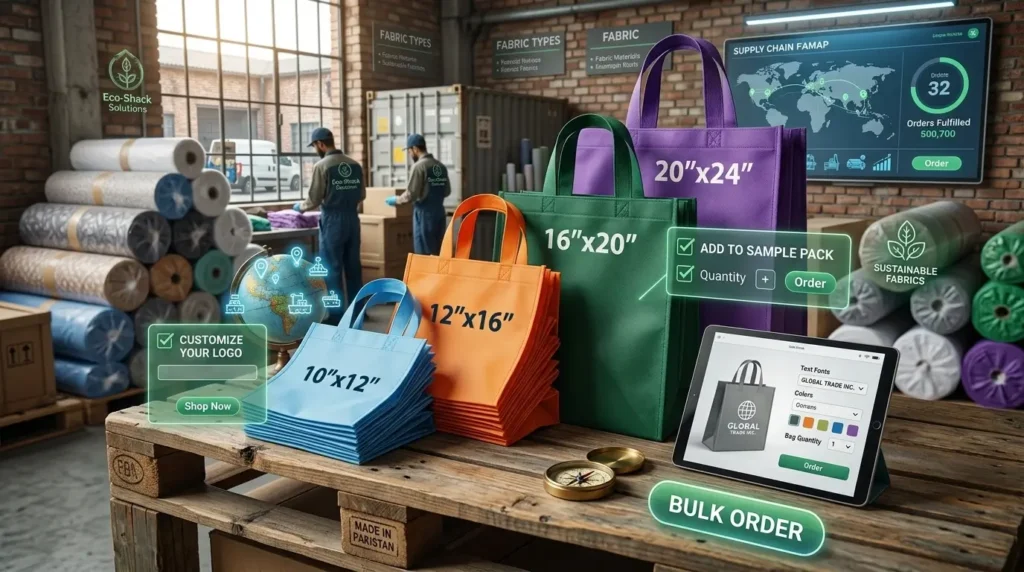
A bag too small forces food to get squeezed and shifted, which for anything delicate cream rolls, decorated cakes, biryani with garnish on top means it arrives looking nothing like it did when it left the kitchen. A bag too large lets food slide around during transport, which is just as bad. Most food businesses order one or two generic sizes instead of matching bag dimensions to their actual most-ordered items.
Some businesses figure branding is a “later” problem get the food out first, worry about the logo once things are stable. But an unbranded bag is a missed opportunity every single day you use it, and once you’re used to ordering plain bags, going back to redesign and reorder feels like a hassle, so it just never happens.
Here’s where a lot of guides go vague. Let’s not.
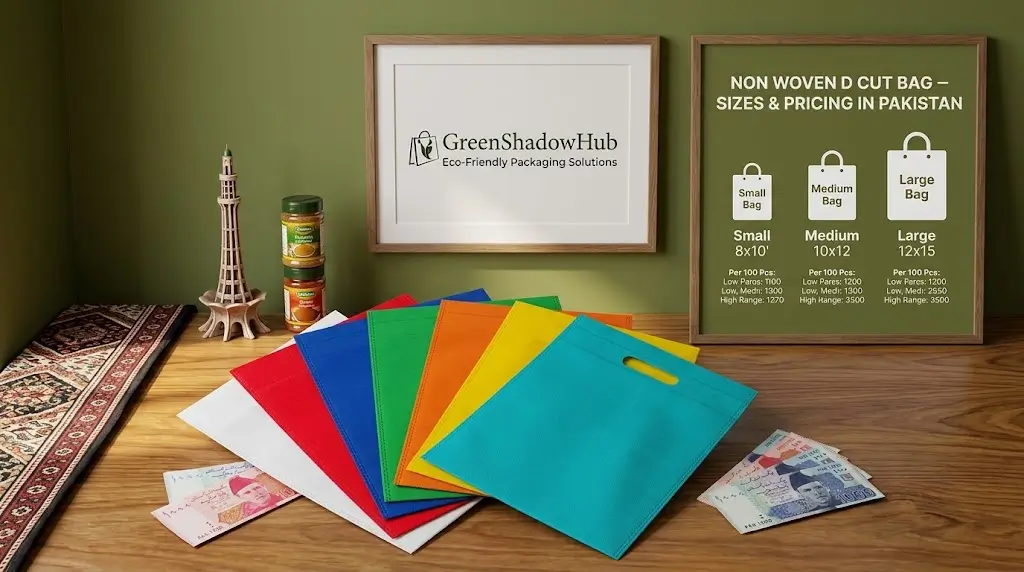
Plain, unprinted non-woven bags in Pakistan typically run somewhere between Rs. 8 to Rs. 20 per piece depending on size and GSM, when bought in bulk from a local manufacturer rather than retail. A small takeaway-size bag (suitable for a couple of food boxes) sits at the lower end; larger grocery or catering-size bags cost more.
Custom printed non-woven bags with your restaurant’s logo and name start around Rs. 15–35 per piece for single-color printing on standard 60-80 GSM fabric, in bulk orders of 500 to 1,000 pieces. Multi-color printing, thicker fabric (100+ GSM), or laminated grease-resistant finishes push that up to Rs. 30–60 per piece.
For comparison, thin plastic bags cost roughly Rs. 3–8 per piece cheaper upfront, no question. But factor in the complaint rate, the occasional torn-bag refund, potential fines under provincial plastic bans, and the branding value you’re leaving on the table, and the math shifts fast for any business doing consistent volume.
A mid-sized food business doing 300–500 takeaway or delivery orders a month, switching to custom printed non-woven bags, is looking at roughly Rs. 6,000–15,000 in monthly packaging cost depending on bag size and print complexity. That’s a real number, and it’s not small for a business running tight margins but weigh it against what a single viral complaint about a leaking bag or soggy food can do to a Google rating that took two years to build.
Before placing a bulk order, run through this:
That paratha wala near Liberty Market didn’t set out to fix his branding or his customer retention. He just wanted people to stop complaining about grease stains. Turns out those were never two separate problems they were the same problem wearing different clothes.
Food businesses spend enormous energy perfecting recipes, plating, and delivery speed, then hand the whole experience over to a bag that undoes half of it in transit. The food is only as good as what it arrives in. That’s not a marketing line, it’s just what customers actually experience.
If you’re a food business in Pakistan looking to move from thin plastic to something that actually holds up grease, weight, heat, and all GreenShadowHub supplies custom non-woven bags built for exactly this kind of daily use.
WhatsApp us